Combat in Voxel Heroes is built around a simple decision: confirm that an attack connects, then spend the opening on an ability or short combo before returning to a safe position. The most useful combat reference is not a damage ranking; it is knowing which hero, range, movement option, and encounter interaction fits the target in front of you.
Voxel Heroes combat systems at a glance
The table groups the combat systems and encounters that affect how you fight. Use it to choose a starting approach, not as a promise that every hero has the same moves or unlock conditions.
| System or encounter | Combat role | How to use it | How it becomes available |
|---|---|---|---|
| Basic attacks | Reliable opener and hit check | Test range, confirm contact, then connect an ability or combo | Choose any available Hero |
| Combat combos | Sustained pressure | Use an opener, confirmed follow-up, ender, and reset | Fight with a Hero and practice the sequence |
| Hero abilities | Damage, control, movement, or range | Pick the ability that matches distance and the enemy's opening | Equip the relevant Hero; some abilities depend on upgrades |
| Iron Man | Airborne and ranged pressure | Use flight and distance with Repulsor, Beam, Dive, or Swarm | Unlock and equip Iron Man |
| Hulk | Close-range pressure and grabs | Get close for Punch, Throw, Grab, Smash Combo, and Gamma Rage | Complete the Bruce Banner and Inhibitor unlock chain |
| Thanos encounter | Interactive boss progression | Stay close, complete the quick interaction, and attack the indicated gem | Trigger the Thanos-related quest or encounter |
| Boss Fights | Specialized boss battles | Choose the available difficulty and learn the boss's attack window | Enter through the map, a quest, or a Hero unlock route |
| City Crimes | Open-world encounters | Respond to crimes, fight enemies, and combine movement with abilities | Explore the city and accept or find events |
| Team Battles | Coordinated multiplayer combat | Assign targets and roles, focus the objective, and regroup after pressure | Enter Team Battles mode |
This overview also explains why a single “best” combat style is misleading. Iron Man can keep fights at range, Hulk converts proximity into grabs and heavy hits, and Doctor Strange can change positioning with Portals and spells. The right choice depends on whether the encounter rewards distance, a close-range interaction, area pressure, or coordinated target control.
The reliable combo pattern
Treat a combo as a four-part structure: Opener → Confirmed sequence → Ender → Reset. The opener creates the opportunity, but it does not guarantee that the rest of the string is safe. Watch for the hit confirmation before adding the next input.
On a confirmed hit, add one follow-up that the target can realistically be caught by. Finish with a safe ender rather than continuing to press for maximum damage. Then move, defend, or create distance so the next exchange begins on your terms. A shorter sequence that connects consistently is more useful than a long sequence that leaves you exposed whenever the first attack is blocked, dodged, or misses.
If the target blocks or avoids the opener, stop the planned string. Do not treat the failed opener as permission to keep inputting attacks. Reset your position, watch the enemy's next action, and try again when you have a real opening. This hit-confirm rule applies across basic attacks, Hero abilities, and the more demanding boss encounters; for longer-term damage or mobility problems, compare the upgrade branches after the fight.
Choosing a hero for the fight
Iron Man: Use Iron Man when you can benefit from space and aerial movement. The demonstrated ability set includes Repulsor, Beam, Dive, and Swarm. Start outside the opponent's immediate reach, confirm a ranged hit, and use movement to avoid standing in one predictable location. Dive gives you a way to change the angle of engagement, while the other abilities let you continue applying pressure without committing to a purely close-range exchange.
Use Iron Man's ranged combat abilities
This moment supports the Iron Man section by demonstrating Repulsor before Beam, Dive, and Swarm abilities.
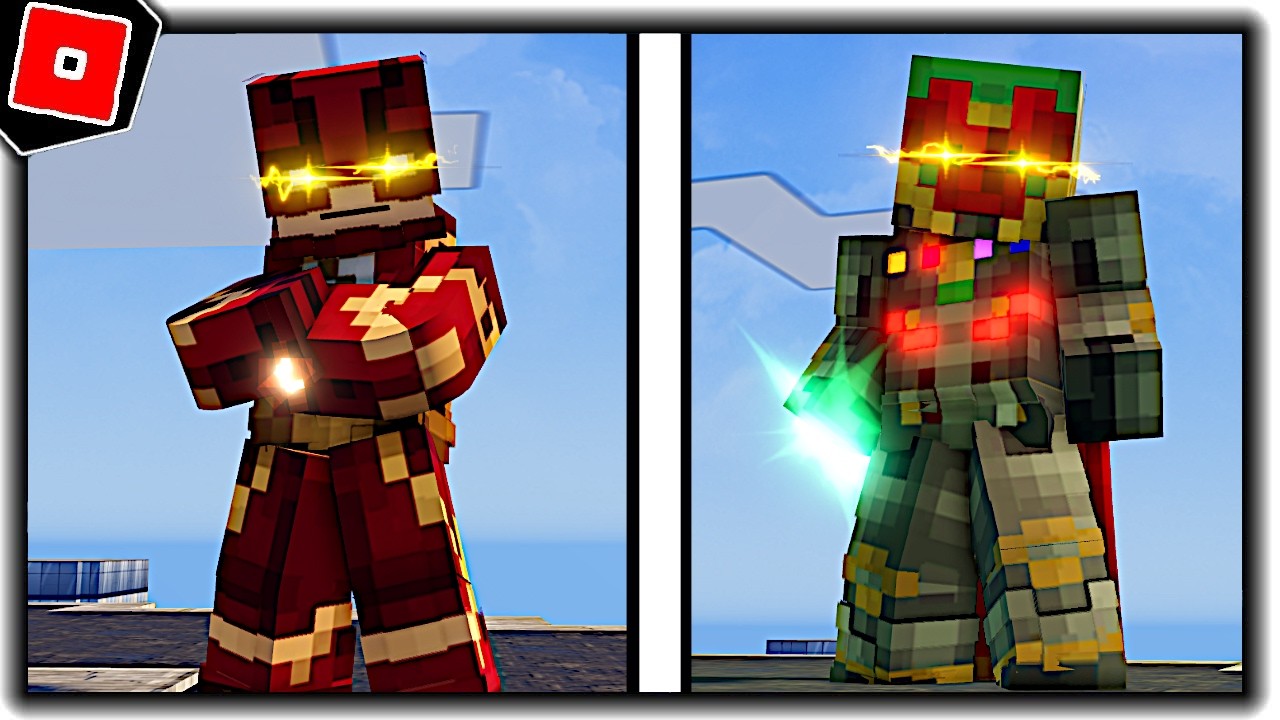
Hulk: Hulk is the opposite decision. Punch, Throw, Grab, Smash Combo, and Gamma Rage are built around getting close enough to control the opponent. Approach with a clear opening instead of walking into attacks, then use the opening to secure a grab, throw, or heavy sequence. Hulk's combat route is especially important because the Hero unlock is itself a combat process: the Laptop puzzle, Bruce Banner encounter, and Inhibitor interaction all need to be completed before the reward is available.
Doctor Strange: Doctor Strange is useful when position matters as much as raw contact. Portals and spells can change where the fight happens and help you manage an enemy that is difficult to approach directly. Use the positioning tool first when the current distance is bad; do not assume that a mobility or spell option should be spent as a finisher every time.
Other Heroes: Voxel Heroes includes a broad Hero roster and upgrade trees, but there is no complete move list, damage value, cooldown table, or universal tier ranking for every Hero here. Read each Hero's current in-game ability and upgrade panels before copying a combo or deciding that one Hero is always better.
Bosses, crimes, and team fights
City Crimes are practical combat training because they combine movement through the city, enemies, citizens, and Hero abilities. Arrive with a clear target, help resolve the encounter, and avoid chasing one enemy so far that you lose awareness of the rest of the event. Switching Heroes, completing missions, and upgrading can fit into the same broader progression loop, but a crime encounter does not prove that every Hero shares the same unlock requirement.
Boss Fights are separate from ordinary street encounters. The available modes include Normal and Hard, and the materials also mention a possible Nightmare difficulty that may require a Ticket. The exact Ticket source, difficulty numbers, and reward values are not established here, so check the current mode panel before spending a Ticket or planning a reward route. Enter with a Hero whose range and movement suit the boss's attack windows rather than assuming that normal enemy tactics will transfer unchanged.
The Thanos encounter adds an interaction check to the damage phase. Stay close enough to Thanos for the quick interaction to appear, complete the drag action when prompted, and attack the relevant gem to advance the phase. Long-range attacks alone may not move the encounter forward if the required interaction has not been completed. The number of phases and the penalty for a failed interaction can change with the current game version, so follow the on-screen prompt rather than memorizing an unverified sequence.
In Team Battles, the objective should determine the formation. Give the front position to the player who can safely hold attention, let ranged or control-focused Heroes work from useful distance, and keep a teammate available to help with a threatened target. Focus the agreed target instead of splitting into separate chases. Once the team gains an advantage, turn it into the objective, a defensive position, or a coordinated retreat; do not throw the advantage away by pursuing a lone enemy into a bad area.
Hulk and Thanos combat checkpoints
The two named encounters have different failure points, so use different checklists.
For Hulk's unlock route, go to the snow biome area and locate the hill cave before trying to solve the fight as a normal boss. Open Bruce Banner's Laptop and complete the puzzle in which the red element must be kept away from the DNA chain; the available route identifies D and P as the relevant selections. The Bruce Banner battle follows. After the combat exchange, complete the get-up and Inhibitor interaction. Only then does the Hulk unlock sequence reach its intended completion. If the unlock does not advance, check the interaction objective rather than repeating attacks.
Complete the Bruce Banner fight for Hulk
This moment supports the Hulk unlock route by showing the Bruce Banner fight followed by the Inhibitor interaction.

For Thanos, approach the encounter with the interaction prompt in mind. Remain near Thanos, complete the drag interaction, and then hit the indicated gem. If damage appears to have no effect on the next phase, the likely action is to look for the required interaction or gem target, not to keep repeating the same distant attack. The precise phase count and failure behavior should be confirmed in the current encounter.
Upgrades and combat progression
Combat rewards and progression can feed Hero XP, Money, and Cores. The Upgrade Tree can strengthen areas such as Power, Charge, Movement, Auto Attack, or a specific ability. Use upgrades to reinforce the way you actually fight: a ranged Hero benefits from the movement and ability options that preserve distance, while a close-range Hero needs reliable access to the opponent and a way to convert contact into pressure.
Upgrade one clear weakness at a time and then return to an encounter that tests it. If you repeatedly miss because the opponent escapes, movement may matter more than another damage option. If you reach the target but cannot finish a confirmed opening, an ability or power upgrade may be the better next choice. The game does not provide enough confirmed values here to calculate an optimal spending order, so compare the current Upgrade Tree descriptions and costs in-game.
Combat limits and current-value checks
Combat advice is stable at the level of decisions—confirm hits, respect range, stop after a blocked opener, and complete encounter interactions—but exact values are mutable. The current combat information does not establish every enemy, Hero's full ability list, damage multiplier, cooldown, combo input, difficulty reward, or Ticket source. Do not infer one Hero's unlock condition from another Hero, and do not use a remembered video sequence as a substitute for the current prompt.
When a fight feels inconsistent, first check the current Hero panel, upgrade description, mode panel, and objective marker. Those interfaces are the appropriate authority for values that can change. Keep the safe loop in place: choose the Hero for the matchup, establish distance, confirm the first hit, spend a controlled sequence, then reset before the opponent can reverse the exchange.
First-time Voxel Heroes combat questions
What should I do when a combo opener is blocked or dodged?
Stop the planned string, move or defend, and reset your distance. Continue a combo only after a basic attack or ability has actually connected.
Which Voxel Heroes Hero is better for ranged combat?
Iron Man is the clearest ranged and airborne option described here, with Repulsor, Beam, Dive, and Swarm abilities. Use flight and distance rather than treating Iron Man like a close-range grappler.
How do I advance the Thanos fight?
Stay close to Thanos, complete the displayed drag interaction, and then attack the relevant gem. Damage from a distance may not advance the encounter when the interaction has not been completed.
What is required in the Hulk unlock combat route?
Complete Bruce Banner's Laptop puzzle, fight Bruce Banner, finish the get-up interaction, and place the Inhibitor. The unlock route is not completed by simply defeating an enemy.
Should I choose Normal or Hard Boss Fights first?
Choose the difficulty shown as available for your current Hero and progression, then check the current mode panel for requirements and rewards. Normal and Hard are identified, and Nightmare may require a Ticket, but every requirement and reward value is not established here.